
Use a rowing machine properly with this four-phase stroke guide: legs, body, arms, then reverse. Setup, breathing, common mistakes and a drill progression.
How To Use A Rowing Machine Properly
Push with your legs, swing your body back, then pull with your arms. Reverse it on the way up. That sequence is the whole stroke, and Concept2’s technique guide teaches it the same way. Most beginner problems come from reversing the order and pulling with the arms first.
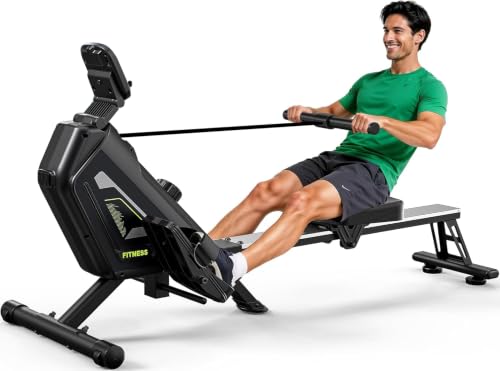
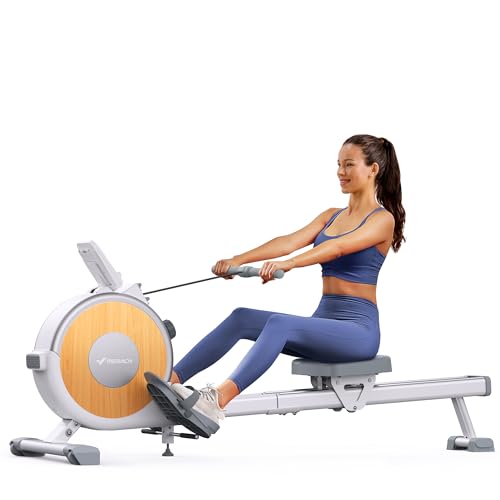
Rowing Machines Easy To Learn On
A smooth rail and quiet resistance make it easier to focus on form. Both are in stock at Amazon.ie and dispatched by Amazon.
Understanding The Main Parts Of A Rowing Stroke
The Catch
Knees bent, shins roughly vertical, arms straight, torso leaning slightly forward from the hips. Shoulders relaxed.
The Drive
Push through the legs first with arms straight. As the legs finish, swing the torso back a little, then draw the handle in. About 60% of the work comes from the legs, according to Human Kinetics.
The Finish
Legs straight, core braced, handle lightly touching your lower ribs. Lean back only slightly.
The Recovery
Arms go out first, then the body pivots forward, then the knees bend and the seat glides to the catch. Take about twice as long on the recovery as on the drive.
Watch Proper Technique In Action
How To Set Up A Rowing Machine Correctly
Foot Position
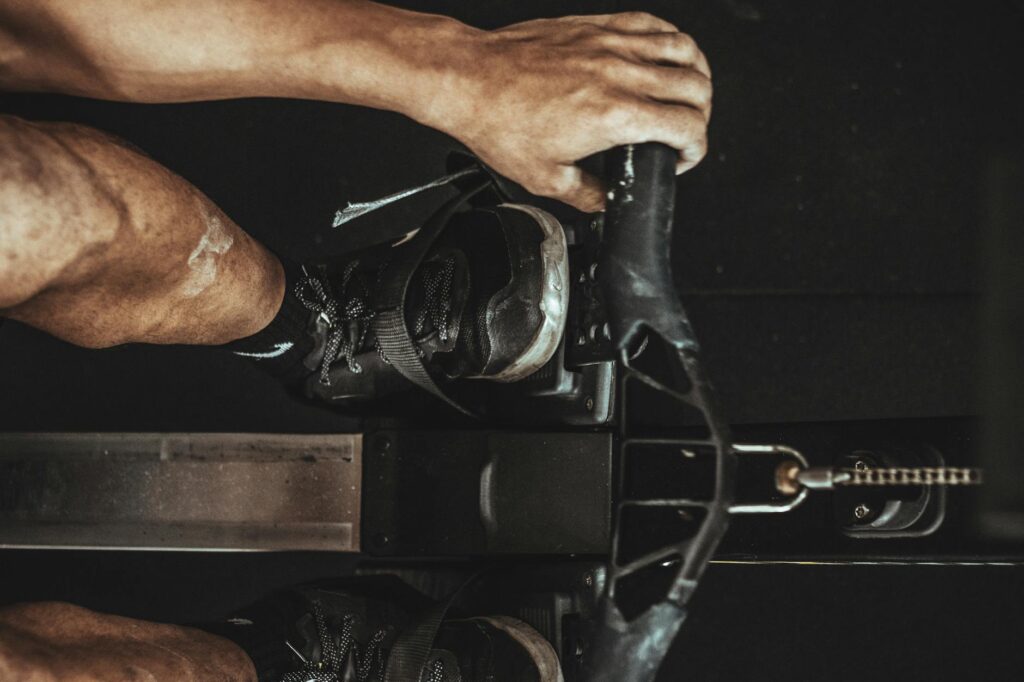
Straps go across the widest part of the foot. If your heels lift a lot, adjust the footplates until the strap sits over the ball of the foot.
Damper Setting
Air rowers have a damper from 1 to 10. A middle setting of 3 to 5 usually feels closer to a boat and is easier on the back. Magnetic rowers use numbered resistance levels instead, so start low there too.
Monitor Setup
Watch stroke rate and split pace. Beginners should aim for smooth technique first and treat the numbers as feedback.
The Biggest Mistakes Beginners Make
- Pulling with the arms too early. Legs first.
- Rounding the lower back. Keep the chest open and hinge at the hips.
- Rushing the stroke. A slow recovery gives you time to reset.
- Leaning too far back. It loads the lower back for no extra power.
- Setting resistance too high. Smooth strokes beat heavy ones.
Breathing Properly While Rowing
Exhale on the drive, inhale on the recovery. Holding your breath tightens the core and brings on fatigue early.
How Long Should Beginners Row?
Ten to fifteen minutes for the first few sessions, then 20 minutes once the stroke feels natural. Our guide on how long to row has a weekly plan, and the HSE guidelines give the weekly activity target.
Beginner Rowing Workout Example
Learn the stroke in stages before trying intervals. Do each for about two minutes, easy pace:
- Arms only, with the legs straight and body upright
- Arms and body swing, with the legs straight
- Quarter slide, adding a short leg push
- Half slide, then full slide once the sequence feels automatic
Then row 10 minutes continuously at 20 to 24 strokes a minute. If your form breaks, drop back a stage.
Video Guide For Beginners
Using Rowing Machines Safely
- Keep a neutral spine and avoid collapsing the chest
- Let the knees track in line with the toes
- Keep the shoulders relaxed instead of shrugging
- Row easily for five minutes before pushing harder
Improving Technique Over Time
Film yourself from the side, slow the stroke down, and watch whether the legs, body and arms move in order. For what each muscle contributes, see our guide to the muscles a rowing machine works.
Common Questions About Rowing Machines
Is Rowing Better Than Running?
Different benefits. Rowing is lower impact and uses more of the upper body, while running loads the bones more. See whether rowing is good for weight loss for calorie comparisons.
Can Beginners Use A Rowing Machine?
Yes. Focus on technique before intensity.
Should You Row Every Day?
Some people can, but vary the intensity and keep at least one or two easier days.
What Stroke Rate Is Best?
Beginners usually settle at 20 to 24 strokes per minute for moderate rowing.